Unleashing Creativity with Melody: A Designer's Guide to Color Fonts
In the world of design, the tools we choose tell a story long before the words are read. For years, we've worked with the reliable monochrome of standard typefaces—solid black, crisp white, a single brand color. But what happens when the font itself becomes a primary visual element? Enter the color font, a revolutionary shift in modern typography, and Melody is a prime example of this exciting evolution. It’s not just a set of characters; it’s a complete design asset packed with color, texture, and personality.
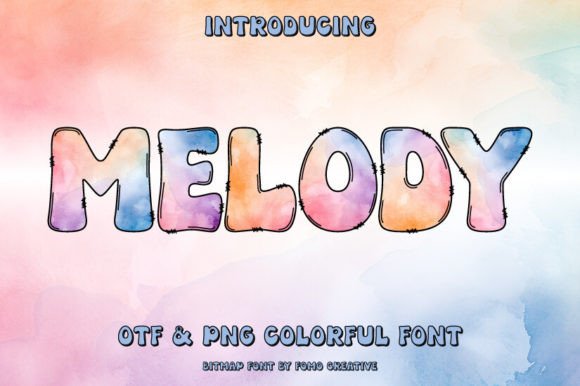
Melody is a premium font that moves beyond simple shapes. Each letterform is a miniature work of art, rendered with vibrant, multi-colored gradients and subtle visual effects. Think of it as the difference between a pencil sketch and a full-color illustration. Where a traditional serif font or sans serif font provides structure, Melody provides atmosphere. It’s designed for projects that need to make an immediate, memorable impact, transforming standard text into a dynamic focal point. This isn't about replacing every font in your toolkit, but about having a specialized creative font for when a project truly demands to be seen.
Where Melody Finds Its Voice: Ideal Applications
The true value of a typeface like Melody is realized when it's applied to the right context. Its bold, artistic nature makes it a standout choice for specific applications where visual appeal trumps dense readability. As a designer or creative professional, understanding these sweet spots is key to leveraging its full potential without compromising your project's effectiveness.
Branding and Marketing That Pops
For entrepreneurs and small business owners, first impressions are everything. Melody can be a game-changer for logo design and brand identity systems, especially for brands that are playful, creative, or luxury-oriented. Imagine a boutique bakery, a children's toy store, or a high-end cosmetics line using Melody in their logo. The inherent color and style communicate brand personality instantly. It works beautifully for:
- Social Media Graphics: Create scroll-stopping Instagram stories, post headers, and sale announcements. The font's visual energy is perfectly suited for the fast-paced digital feed.
- Advertising Banners: Whether for a website or a digital ad campaign, headlines set in Melody draw the eye and increase engagement.
- Packaging Design: Use it for product names or key call-outs on packaging to create shelf appeal and a sense of premium quality.
Publishing and Editorial Flair
In editorial design, hierarchy is crucial. Melody excels as a display font for magazine covers, article titles, pull quotes, and chapter headings. It provides a stunning contrast to body text set in a clean, readable serif or sans serif font. For bloggers and content creators, using Melody for featured image text or newsletter headers can significantly elevate the perceived value and professionalism of their content. It’s a tool for making key information feel special and worth reading.
Personal Projects and Crafting
Beyond commercial use, the appeal of a creative font like Melody extends to personal projects. For crafters and hobbyists, it opens up new possibilities for creating unique greeting cards, party invitations, custom planners, and digital scrapbook elements. Its vibrant look is perfect for celebratory and festive designs, adding a layer of handcrafted artistry that standard fonts can't replicate.
Working with a Color Font: Practical Considerations
Adopting a new type of font asset like Melody requires a slight shift in workflow. Because it's an OpenType-SVG color font, it embeds rich graphic data directly into the font file. This is what creates the beautiful gradients and effects, but it also means compatibility and usage differ from standard OTF or TTF files. Always start by reviewing the font's documentation—our Ultimate Font Guide is an essential resource for mastering its features.
Evaluating Readability and Hierarchy
The most important rule with any display or script font is to use it judiciously. Melody is designed for impact, not for setting paragraphs of body copy. Its detailed, colorful nature works best at larger sizes where its artistic qualities can shine. For maximum effectiveness, use Melody for headlines, short phrases, or single words. Pair it with a simple, neutral font for supporting text. This creates a clear visual hierarchy: Melody captures attention, and the secondary font delivers the detailed information clearly.
Testing and Font Pairing
Before committing, test Melody in your specific design software. It's compatible with major programs like Adobe Photoshop and Illustrator, as well as Silhouette and Inkscape. Experiment with font pairing. A geometric sans serif font can provide a clean, modern counterbalance to Melody's ornate style. A classic serif font can lend a touch of elegance. The goal is to create contrast, not competition. Let Melody be the star of the show, supported by a reliable ensemble cast.
Licensing and Commercial Use
For designers, marketers, and business owners, understanding the licensing is non-negotiable. Melody is a commercial font, and its license dictates how you can use it. Typically, a license covers use in a specific number of projects or for a single client. If you're creating assets for multiple clients or for a large corporation, you may need an extended license. Always review the terms to ensure your use is compliant, protecting both your work and your client's brand. This due diligence is a mark of a professional and ensures your brand identity is built on a solid, legal foundation.
Ultimately, Melody and other color fonts represent an expansion of the designer's palette. They are specialized tools that, when used thoughtfully, can inject unparalleled vibrancy and personality into a project. By understanding its strengths, ideal applications, and practical requirements, you can harness its power to create designs that are not only beautiful but also strategically effective and truly unforgettable.